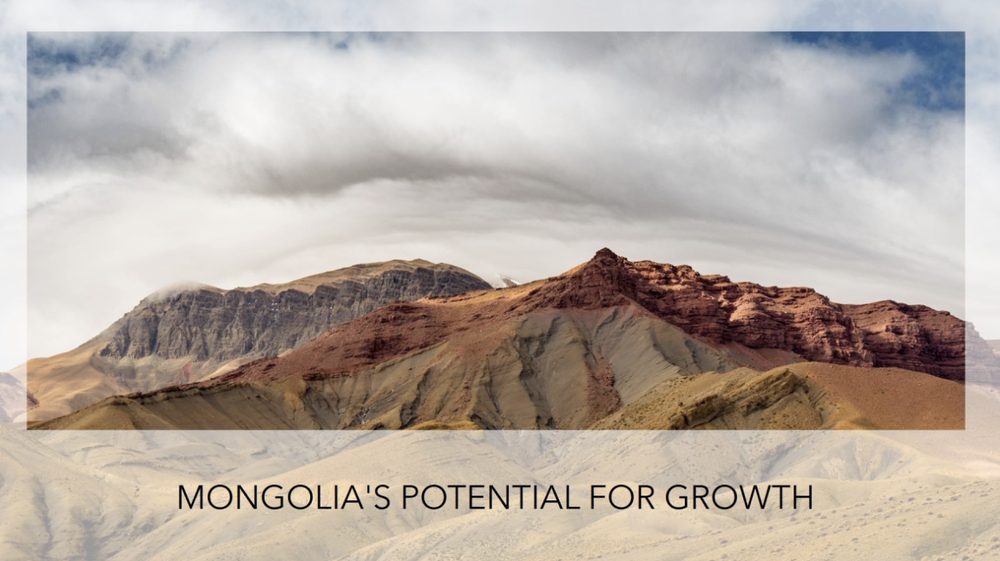
How Mongolia Could Become the Next Dubai: A Comprehensive Analysis
Mongolia, long known for its vast, rugged landscapes and nomadic culture, is
emerging on the global stage as an economic and investment hub. As it seeks to
transform its resource rich economy, Mongolia is drawing comparisons to Dubai’s
rapid rise. This article explores Mongolia’s potential to become the “Next Dubai,”
examining in brief its geographical position, geopolitical landscape, government
strategy, investment climate, and economic outlook.
1. Geographical Position
Mongolia is landlocked between two powerful neighbours: Russia to the north and
China to the south. While lacking direct access to sea routes, Mongolia’s strategic
location provides it with an opportunity to serve as a crucial link between China,
Russia, and other parts of Asia. The country’s vast natural resources, including coal,
copper, and rare earth elements, make it a strategic player in the global supply
chain.
As part of the Belt and Road Initiative (BRI), China has invested heavily in
infrastructure that connects Mongolia to its economic corridors. These include
railways, highways, and pipelines that facilitate the movement of goods and
resources between Mongolia and other major economic centers. Its location also
positions it as a gateway for the trans-Eurasian Economic Union. Although this
status may not yet be fully capitalised on, Mongolia’s geographical potential is akin
to the advantage Dubai holds as a bridge between the East and West.
2. Geopolitical Landscape
Mongolia’s geopolitical strategy revolves around its “third neighbour” policy, which
seeks to build relationships beyond its direct neighbours, Russia and China. By
expanding partnerships with countries like the United States, Japan, South Korea,
and the European Union, Mongolia has gained economic support and political
leverage. This diversification has also allowed Mongolia to navigate the complex
dynamics of being sandwiched between these superpowers especially after the
Russia Ukraine war where Mongolia became a solution that might link Russia to the
rest of the world.
Russia and China’s relationship with Mongolia has historically been one of influence,
especially in trade and infrastructure projects. However, Mongolia has shown a
cautious approach, balancing both countries’ interests while seeking independence
in decision making. This approach mirrors Dubai’s strategy of positioning itself as a
neutral business hub in the Middle East, navigating its way through competing
regional powers while maintaining ties with Western nations.
3. Government Plans and Actions for Economic Transformation
The Mongolian government has introduced numerous initiatives aimed at creating a
diversified and sustainable economy. In recent years, a series of strategic policies
have set the stage for Mongolia’s transformation:
•Vision 2050: A comprehensive economic and social development plan that
outlines goals for economic growth, infrastructure modernisation, and quality
of life improvements. It focuses on sectors like mining, agriculture, tourism,
and information technology to reduce dependency on resource exports.
•The New Revival Policy: Aims to improve infrastructure, ensure sustainable
development, and foster a more stable business environment. The policy is
focused on diversifying income sources, improving industrial output, and
enhancing the agricultural sector’s contributions to GDP.
•Green and Sustainable Initiatives: As global interest in environmental
sustainability grows, Mongolia has embraced green energy projects and
sustainable mining practices. Its expansive land and abundant sunlight make
it a prime candidate for solar and wind energy production.
•Mongolia’s government has also been active in negotiating trade agreements,
which bolster its ambitions of becoming a major economic center.
Agreements with the Eurasian Economic Union and interest in joining the
Asia-Pacific Economic Cooperation (APEC) forum reflect its determination to
expand its influence.
4. Investment Environment
Over the last decade, Mongolia has made significant strides in improving its
investment environment, with policies aimed at making the country more attractive
to foreign investors:
•Improved Regulatory Environment: The Mongolian government has
introduced several reforms to streamline the investment process, reduce
bureaucratic hurdles, and protect investor rights. The Investment Law of
Mongolia, implemented in 2013, protects foreign investors and encourages
them to participate in joint ventures.
• Tax Incentives and Special Economic Zones (SEZs): Mongolia offers tax
incentives in strategic sectors such as mining, agriculture, and infrastructure.
The development of SEZs in cities like Zamyn-Uud, Sainshand, and Khushigt
is designed to facilitate trade and manufacturing, similar to the free trade
zones that fuelled Dubai’s growth.
•Mining and Natural Resources: With one of the world’s largest reserves of
copper, coal, and rare earth elements, Mongolia is attracting mining
investment from international companies. As the global demand for copper
surges, driven by the electric vehicle (for example) and renewable energy
industries, Mongolia is well-positioned to benefit.
•Tourism and Hospitality: Mongolia’s tourism sector is underdeveloped but
holds immense potential. With government support for eco-tourism, luxury
accommodation, and cultural heritage, the tourism sector could become a
significant contributor to GDP. The capital, Ulaanbaatar, is also seeing
increased foreign direct investment (FDI) in its hospitality sector.
Dubai’s success is partly due to its welcoming investment environment, and
Mongolia is emulating this by reducing barriers to entry and establishing policies
that foster a stable and attractive investment climate.
5. Economic Projections for the Future
Mongolia’s economy has grown significantly, averaging 5.1% annual GDP growth
from 2015 to 2019. The COVID-19 pandemic led to a contraction in 2020, but
recovery is underway, with GDP growth projected to stabilise at 5-6% over the next
five years. Economic forecasts are optimistic, fuelled by the following factors:
•Mining Sector Expansion: Mongolia’s mining sector will likely continue to
drive growth. The Oyu Tolgoi mine, one of the world’s largest copper and gold
mines, is expected to contribute significantly to GDP and exports.
•Agricultural Modernisation: Agriculture is the second largest sector in
Mongolia, and government initiatives to modernise the sector could boost
productivity and export potential. Investments in livestock quality, crop
diversity, and export markets will increase Mongolia’s global agricultural
footprint.
•Infrastructure Investments: Major infrastructure projects, such as railways
and highways, are underway, connecting Mongolia to China and Russia.
These projects aim to establish Mongolia as a regional logistics hub,
facilitating trade and commerce across Asia.
•Digital Economy and Innovation: Mongolia is prioritising technology, and
the government has introduced initiatives to promote innovation. Projects in
fintech, e-commerce, and digital services have gained traction, and
Ulaanbaatar is positioning itself as a hub for startups and tech companies in
the region.
Long-term economic forecasts suggest that if Mongolia can continue to attract
foreign investment and diversify its economy, it has the potential to see sustained
growth, much like Dubai’s transformation from a trade port to a global city.
Conclusion
Mongolia is taking bold steps to transform itself into a thriving economic hub. While
comparisons to Dubai may seem ambitious, the country has a clear path forward.
With its strategic location, natural resources, and government backed economic
reforms, Mongolia is creating an investment friendly environment. Its geographical
positioning, prudent geopolitical policies, and robust government plans for
economic diversification contribute to an increasingly optimistic economic outlook.
Though Mongolia’s path to becoming the “Next Dubai” will require careful
navigation of challenges, its foundation is strong, and the potential for rapid growth
is clear.
In the coming years, as Mongolia continues to build upon its ambitious vision, the
world may indeed witness the rise of an economic powerhouse in the heart of Asia.